
Search results for "personal essay writing"

Contact Us Today for a
Free Consultation

Personal Essay Writing

It takes a certain kind of organization to make money and develop its people in equal measure. The national PR agency, InkHouse, recently created Hindsight 2020, a book of essays written by the team about moments of consciousness that opened them up to new points of view. According to CEO, Beth Monaghan, such moments of clarity are important in PR because new connections are the essence of stories that allow someone else’s experience to exist next to our own. That is the very job of PR, to bring people and ideas together.
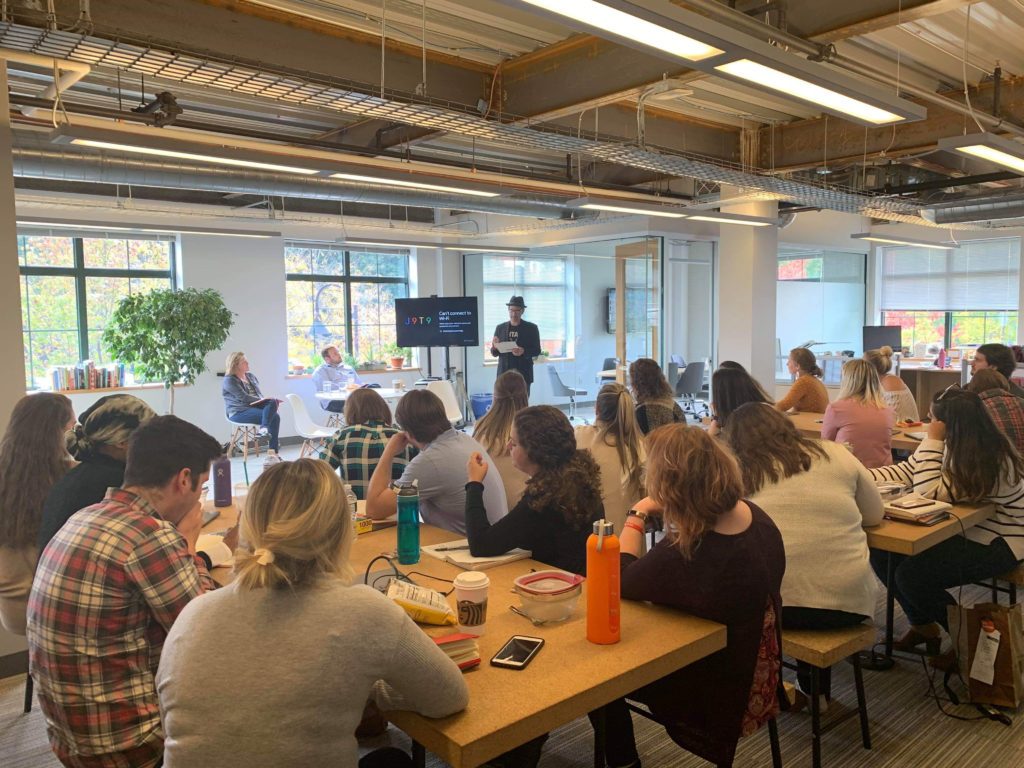
As the coach and developmental editor for Hindsight, I oriented prospective writers to the judging criteria. This criteria would be used to select the top 20 entries for inclusion in the book—and eventually the top three winners as well. Each essay was scored in four categories, with a maximum amount of 25 points per category: VOICE, STRUCTURE, PROFICIENCY, and IMPACT.

VOICE, or: How well the writer’s unique voice comes through in content and expression.

  • Since this was a work setting, the first thing to tackle was how comfortable authors felt to liberate their voice. Wasn’t this work, after all? How close did they want to allow their co-workers to get? I encouraged them, wherever appropriate, to get personal. This was the kind of workplace in which people really did want to get to know each other, and not just use inside information to seize a weakness and climb past someone else on the corporate ladder.
  • Trying too hard is an inherent turnoff for audiences in both PR and in essay writing, so I tried to steer writers away from trying to impress. At the same time, it wouldn’t do to go to the opposite pole and try to shock anybody on purpose, to put the chip on the shoulder on full display.
  • Rather, they were encouraged to consider who their true audience members were. Was there one person at work who got them? Who can you tell your truth to? Who raises your frequency? Who calls you to account? Who loves you at your best?
  • Because see, here’s the thing: There is no such thing as voice in the abstract—there is only tone of voice. Or to put it another way, you don’t look for your voice; you find your audience. And then the tone you take to ring some bells for them, that is what delivers a great sentence. And another one…

STRUCTURE, or: How well the piece evolves around its theme, balances digressions, and creates links and repetitions.

  • For readers of this blog, it will come as no surprise that I recommend honing in on one’s theme as the key to structure. The overarching theme of Hindsight was a moment of clarity that opened the author up to another point of view, a new perspective, or a new curiosity. It could be a historical event, a moment in their life, or their work. Writers then chose a personalized embodiment of that theme.
  • When presented with such a topic, you may have more than one possibility floating around your head. If that was the case, I recommended trying out several possibilities—and being honest about which one really had your heart and mind. Where the writing goes, the writer needs to go after it.
  • Once a moment of clarity was chosen, it was examined; when examined, it was seen to be actually a series of moments. Scenes, if you will. I ran through the five definitions of scene to help generate first draft material, select second draft material and hone third draft material.
  • Finally, we discussed placing those scenes in either chronological or narrative order. We took it as a matter of aesthetic faith that there was a perfect order for one’s chosen scenes that would best relate a moment of clarity that had stayed with its author.

PROFICIENCY: Or, Proper sentence and narrative structure; capable handling of facts and research where necessary.

  • Since we were exploring writing within a public relations environment, it was important to place the essay in the wider context of the world. Such “data” could include findings from a study, a quote from an expert, or statistics that would bring in a degree of objectivity.
  • We didn’t cover topics like grammar or consistency of stylistic usage, but we did touch on how to use the drafting process to bring out clarity in their work. Earlier drafts sometimes can only ask a question that the later drafts will answer. Working on an essay five times will make it stronger than working on it once. That sort of thing.

IMPACT: Or, Effect on the reader in terms of opens up a new point of view/curiosity.

  • I loved this criteria for judging. At the same time, an author will never know that. Or rather, the only way to assess what topic and approach will move others is to assume if it really relates to you, it will relate to us.
  • The question then becomes: What’s in it for me? Which topic, which aspect of that topic will lead to greater self-knowledge? What are you still trying to understand? If you ask yourself a key question, readers may ask it of themselves.
  • To get the answer, of course, you have to open yourself up. You have to allow yourself to be changed. What space do you want to move into? Where is the energy coming from that needs to be liberated? Or to put it another way, in order to make something interesting to other people, you may have to scare the shit out of yourself first.

BA Turns 25: When Corporate Goes Gold

Over the course of the last 25 years, we have done work with a variety of companies and organizations to help their employees become better writers. We teach the basics of structure (scene, series, and theme, you know the drill); the primacy of voice; killing your darlings; how to begin a little bit further on because that is where the good stuff actually gets going; and how to earn your end—through the somewhat torturous process of sorting out the middle.

With that said, at InkHouse Public Relations, we were not only invited to help people become better writers — but become the people they were intending to be all along. Over the course of a decade, we were privileged to teach people how (and why) to leave your reader wanting more, but also to help writers describe what their grandfathers meant to them, how to come clean about their addictions and still be able to manage people (in fact, to be able to manage them better), and how to reach back into the past and connect some of the dots of their experiences to discern where things might be heading in the future.

At InkHouse we put together yearly books of essays, or hosted Moth-style readings, bravely sending the work out into the world so that clients would really know who they were working with—fusing the personal with the professional, in a way that benefitted both lenses. Under the auspices of co-founder and CEO, Beth Monaghan, an excellent writer in her own right, we operated with the understanding that creative non-fiction was neither “unprofessional” nor was it “too personal” — if it was good. Then it could benefit all kinds of relationships, including the one you have with yourself.

We would never want to put words into Beth’s mouth, but it seemed like she realized that some of her employees wouldn’t work for her forever. Hey, it happens. And that means that you have a responsibility to develop not only their resumes and their experience, but their hearts and souls — and to help give credence to a human being’s natural creative gifts. And that is why our work at InkHouse is this month’s chosen highlight from the last quarter century.

Caulk

This month, Inkhouse Public Relations debuted its fifth book of employee-authored essays. Entitled Faded Lines, this volume explores the unlikely teachers that helped us connect across difference. The prompt asked:
When did you learn something important from an unlikely place? It could be a person you overlooked or misjudged, an event that revealed deeper significance than you anticipated. What chance encounter, unlikely alliance, or uncomfortable situation taught you something meaningful? 

InkHouse founder Beth Monaghan described succinctly why such corporate culture books are important: “Stories are a foundational way of forming community, in the workplace, in our personal lives, and in the world.”

Over the course of the previous year, Book Architecture assisted as editors and writing coaches, with the proper dash of literary theory thrown in there. And, of course, we wrote, too! Catch a glimpse of Stuart’s contribution here.


Clients Crushin’ It: Lois Kelly

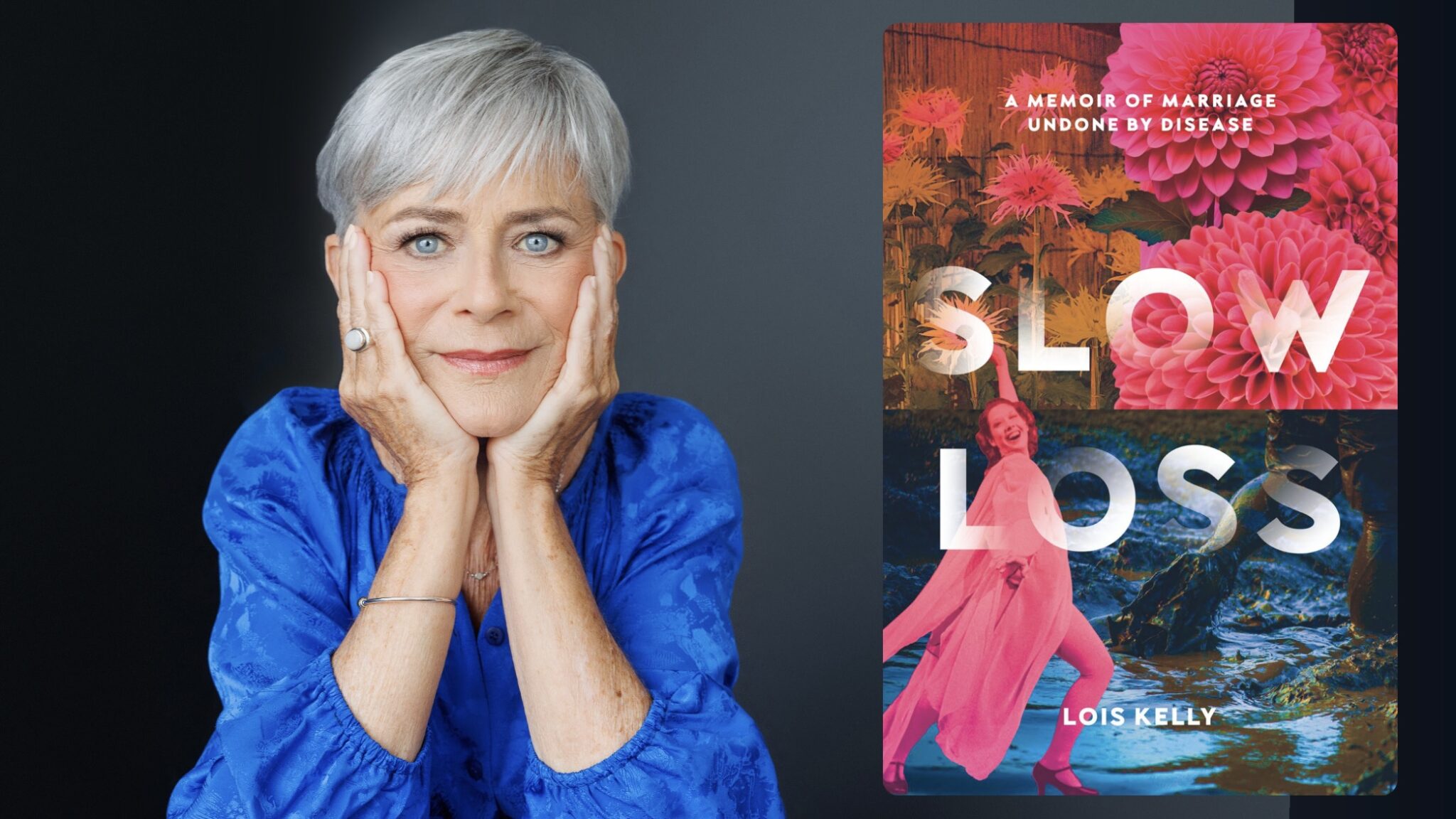
Madison Utley speaks to Lois Kelly following the release of her book, Slow Loss: A Memoir of Marriage Undone by Disease, about the emotional and intellectual impact of transitioning from business to personal material, the reader responses she has gotten so far, and what a commitment to the daily practice of writing has brought–and will continue to bring–to her creative life. 


MU: To start, can you walk me through your overall writing journey?

LK: From a young age, I wanted to be a journalist. I started writing for Boston area newspapers when I was 15. I would report on obituaries, weddings, and human interest stories. Those I especially loved because I could ask people questions and learn different things. I loved the concept of writing as exploration like that. Curiosity is really what drives me. 

My business books that I wrote first were an exploration of trends I was seeing, trying to understand: why is that happening?. Then again, much later on, my memoir is me exploring what I was going through and trying to use my journalism skills to document it, with some sense of compassion and curiosity. 

I sort of lost my way with writing for many years. I got into the corporate world and I wrote speeches for CEOs and I did public relations and marketing; I was good at it and it helped me make a living, but that was such unfulfilling writing for me. When I would get an idea about a book, that was so satisfying. Like a meal where you just don’t want to leave the table because everything is so good. Whereas the business writing in the corporate world was like necessary sustenance. It wasn’t feasting.  


MU: Can you talk to me about the differences you’ve felt between business and personal writing, having done so much of both? 

LK: About 14 years ago I wrote a book called Be the Noodle about how to be a compassionate, courageous, crazy good caregiver. It was a sweet, little book that people still love. That was my first personal work. It was somewhat difficult because you’re exposing yourself. To write anything good, you must be vulnerable. That was frightening. I didn’t feel so comfortable with that, yet I knew if I didn’t fully show up, then it wouldn’t be interesting writing. The story would be dull and the character might be unlikable.

Buddhist monk Thích Nhất Hạnh once said, “How you live is your message to the world.” Much of my writing is about being courageous, resilient, and realistically optimistic, even in dark times. That is my message. (But please, no toxic positivity!)


MU: What led you to seek editorial help with your memoir, and what do you feel like was gained from looping Stuart in? 

LK: That wise, experienced, outside perspective is absolutely fundamental for making something as good as it can be. When you’re writing, you get so close to the material you can no longer see. If you want it to be really good, you need a great editor. And to me, if I’m going to do something, I’m going to make it the best it can be. I want it to be a gift to the reader. 

I remember the first thing I said to Stuart: “You need to tell me if this manuscript is something that was good for my own self healing or if there is a book in it. And please be frank with me.” I had been in a writer’s group for four years by that point and I had seen that some things we write are for our own healing or growth and development, and not necessarily something to be shared. I would have been fine if Stuart said it read like a self healing exercise. Through writing it I got to a much better place, so that was fantastic in and of itself. I was just so close to it and there was so much trauma and change and wildness, that Stuart telling me it was a book and helping me go from there was really valuable. 


MU: What kind of reader responses have you gotten thus far?

LK: The memoir has been out for just a few weeks, so it’s early days, but people are saying it’s stunning, it’s heartbreaking, it’s full of love, it’s hopeful, and that the dark humor grounds it. The feedback has been really beautiful. I almost cried when one woman wrote to me: “No one gets what this is really like. This is a gift to the legions of unrecognized caregivers.” It invited us to have a really interesting conversation about ourselves and our suffering and how dealing with this has shaped us. I’m hoping the book invites people to have much more honest conversations with others in their lives–even with their doctors who sometimes are very good clinically but maybe don’t fully understand the emotional impacts of long diseases on patients and their loved ones. 

There are all these people out there who are bettering the world in big, obvious ways–like neurosurgeons–whom I so admire. I hope that with my writing, I better the world in at least a teeny, tiny way. 


MU: I ask this understanding your memoir hasn’t even been out for a month yet, so forgive me, but do you have any idea what’s next for your writing?

LK: I’ve been writing these essays where I’m looking at business things again but writing about them in a fun new way. They’re about what I’ve learned, what I wish I had done better when I was an inexperienced, insecure manager. I don’t know where they’re going, but it’s really fun to write them–and to write them outside of any business style, much more creatively than I’ve done that kind of writing before. Sometimes it’s just fun to write without having any expectations at all and then after a while, you begin to see something to explore in a more disciplined, organized way. Every book I’ve done, that’s how it’s started: Maybe there’s something here, I’m going to let the ideas grow and then we’ll see. 


MU: Do you have any advice you’d like to share with other writers?

LK: The first thing is to write every day. It’s such a fun practice, but it’s also a discipline just like running or yoga. You write if you want to be a writer. I have a group on Zoom and we meet for an hour every day; we start with 10 minutes of meditation and then there’s a prompt if you want, but you can take it or leave it. Writing daily is so satisfying, and I’m becoming a better writer for it. After a while you start to see a pattern, you begin to get these little pearls, and you’re like: “Oh, that’s what’s going on here.” You’re not going to use them all, but you begin to get some great material. It’s habit and routine, yes, but it’s also fun and light and easy versus ugh, I have to sit down and get this done. It’s a safe place to experiment and play. Having a community supporting that is really helpful and holds you accountable too. 

The second thing, and I have to credit Stuart for this, is that I’m not a traditional writer. Some writing in my memoir skews poetic and then some chapters are more traditional prose. The pace of the reading, the energy of it, works for me. I asked Stuart, “Can I do this with a kind of mixed style, outside of what a classic literary memoir is?” Stuart said to me, “You can do anything you want.” It was the greatest advice I got. It built my confidence and it liberated me. And it makes sense too because, when you look at it, the traditional ways of doing anything are being shaken up. There are fundamentals of storytelling, of course, but how you deliver it should be outside of formulas. So as Stuart told me, I’d in turn urge other writers not to be imprisoned by formulas.