Our Diary

We’ve left it open for you, so you don’t even need one of those little keys. Because writing is life, and keeping it real means forgoing the line between the personal and the professional.

Contact Us Today for a
Free Consultation

Stuff We Love: A Writing Ritual

The notion of writer’s block has always upset me. It is presented as something that comes externally, like bad luck, which you can’t fight against. In general, I have a problem believing that we can’t get better at any activity we concentrate on, and that would include writing. I believe there are ways of improving the chances of having a good writing session—no guarantees, of course, but what fun would that be?
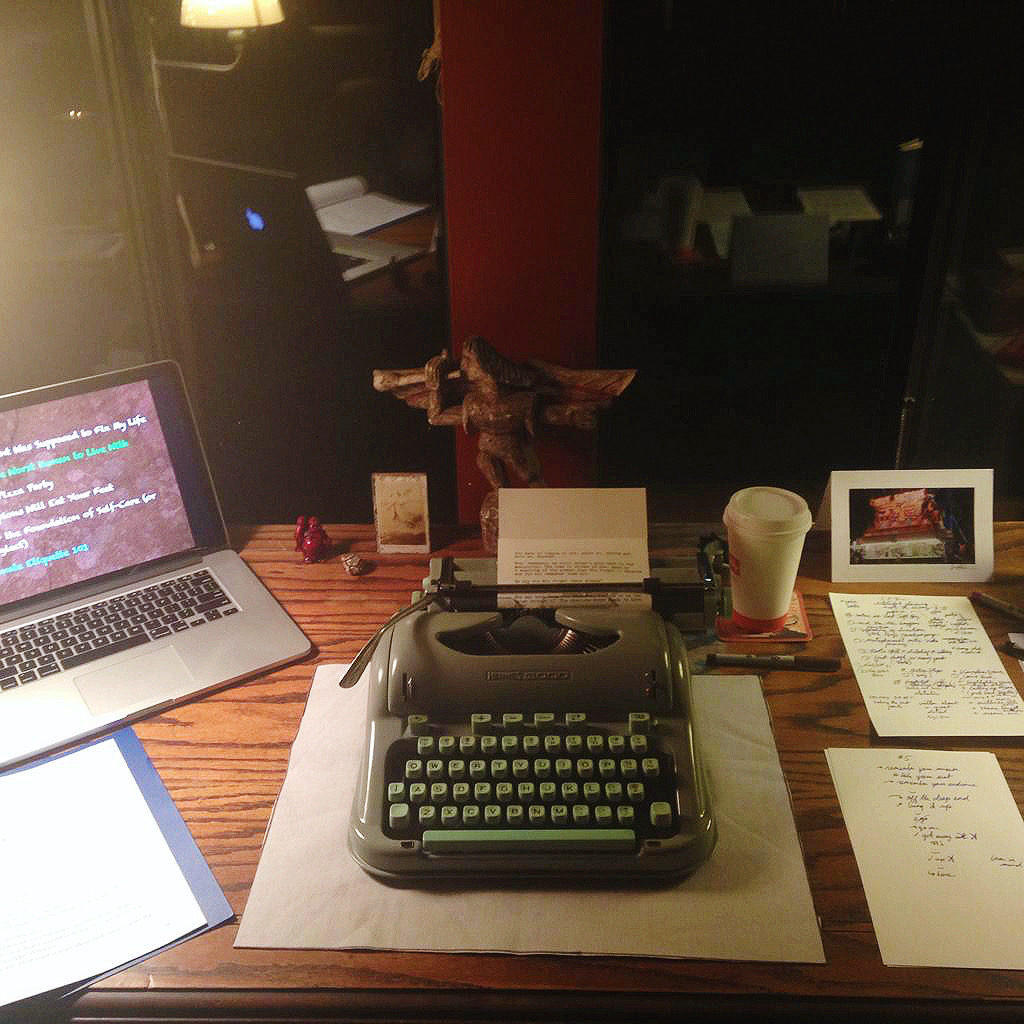
 

Developing a writing ritual can help you increase those odds. Rituals are supposed to be kept private, but people sharing theirs in broad strokes helped me shape my own, and so perhaps I can do the same for you. I should note that the ritual presented here begins after any number of other activities. After meditation and/or running and/or reading at the coffee shop and/or meaningless errands, etc. What all of those activities have in common is their ability to help me drop the outer world, in preparation for the inner. Eventually, I will step inside of a sacred center — see, there you go, now you know whether to start reading something else — and there I will cast the circle that helps me take time to stop time.
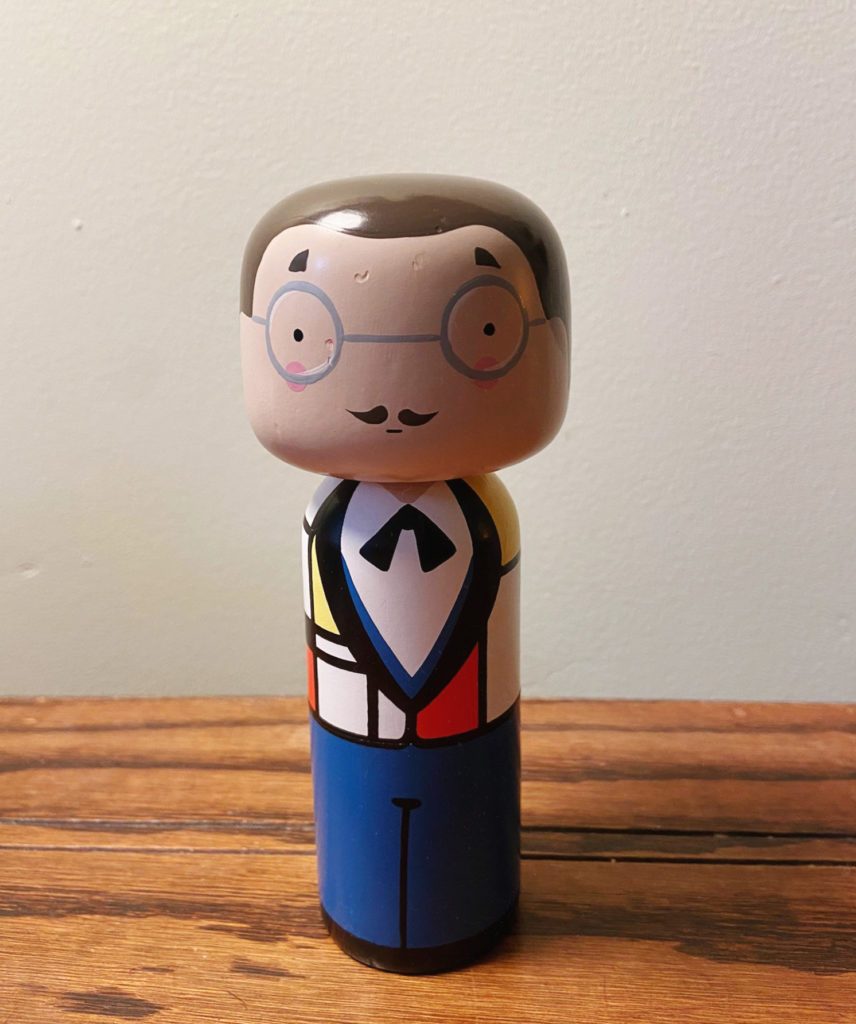
I don’t have a wand, or any crystals — although my relocation to San Diego puts the latter in jeopardy (check back here). But I might use statuary, such as the figurine of Piet Mondrian, who reminds me to embrace the structural ideas that come, as well as content-based ideas; ideas about the thing I’m writing, as well as ideas for the thing I’m writing. I might use talismans, such as a baseball I speared on one clean bounce at an MLB Spring Training game to remind myself it’s time to Play Ball!

I might use candles — okay, I will definitely use candles — even though I forget why certain colors are important. I have heard it said that working within the light in this way helps uplift others and also yourself. I have also heard it said that, in candlelight, the mind is rendered receptive to spiritual energy. I will add, as regards any aspect of a writing ritual: If it works, stick with it.

In the circle, I include functional items, especially those functional items that are also talismans, crossing the real boundary into practical magic, objects that you need and that also remind you of your history—the times you got it right. I find it useful to arrange whatever ritual implements I am using in a half-circle on my desk. This arrangement connects them to each other so they share energies and form an unbroken arc which I sit in the middle of. This circle can be continued behind you in terms of additional lighting, incense, etc. so that it takes up the entire room with you in the center of it.
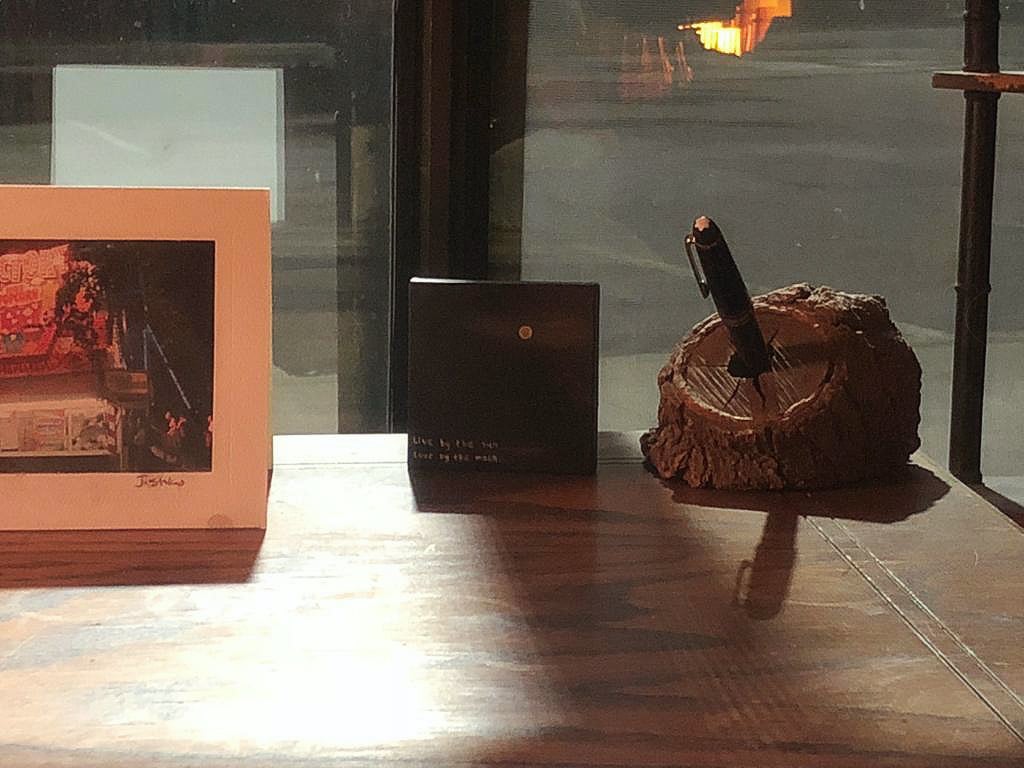


Now, I know what you’re going to say. It sounds like you have an office. I do, but when I travel, I also pack a smaller bag of ritual implements. Wherever you are writing, you can cast a circle. It might be bounded by the train car you are riding in, or have an obstacle in the form of a water heater taking a bite out of one of your arcs. There are always cures, as they say in Feng Shui, for a recognized problem. Everything can be overcome with intention.
The boundaries of a circle can also just be traced with the mind and blessed, as you bless yourself. Entering the circle is an important step away from the world of business, time, and relationships — those relationships where you have to do something now regarding them, anyway — in order to see some of them in their truer nature. Stepping inside the circle establishes protection. Protection from the quotidian and from low self-esteem. Protection from our enemies, in the form of forgiving them.

It is the essence of writer’s block to have someone else stuck inside your own mind; when you can forgive them (except in a few places where you are using them for fuel, albeit with a higher intention), when you can let go of them, you are free. If you can’t forgive a particular person from a place deep down, at least call some kind of truce in your mind: you know, something like we’re all broken in some way, we’re all in process…

Writing exposes you to enough self-criticism without other voices attacking you while you are vulnerable. We don’t have to allow anything unrelated to the writing to approach your flow of words, unless it wants to be used in an imaginative form.

Inside here we are free to be present on just this subject.
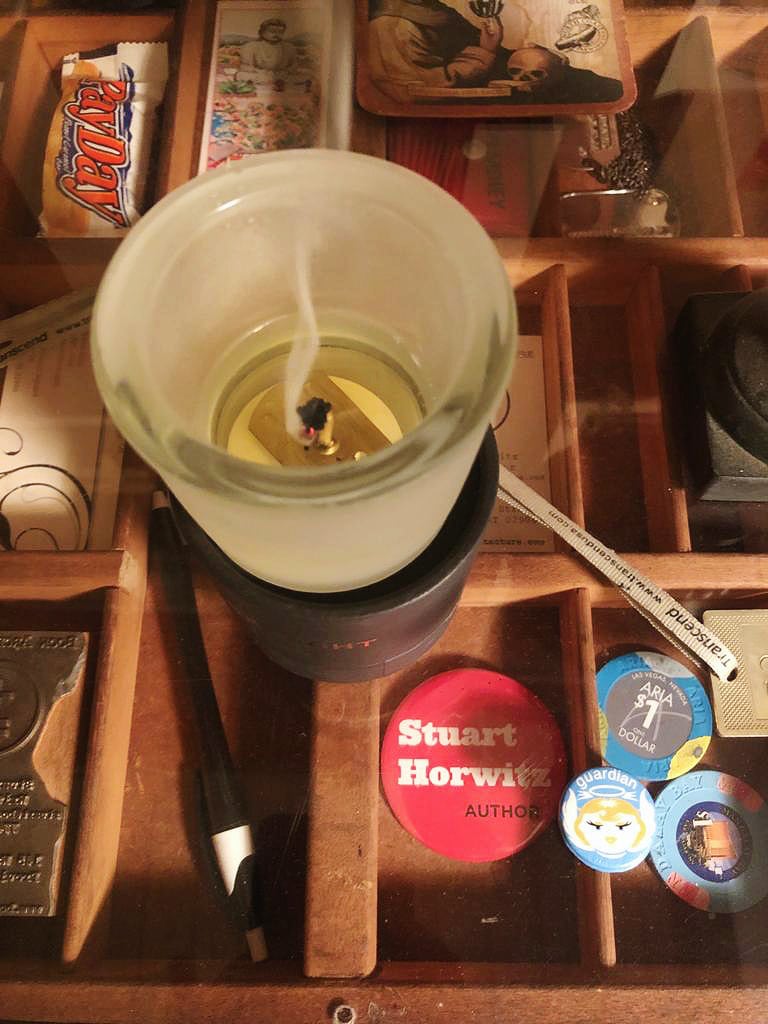
 

P.S. If you get really far out there, don’t forget to blow your candles out when your writing session concludes. I then take pictures of them, in the state of being unlit, because I have a level of anxiety about some things that needs practical assistance.

 

Daddy Doesn’t Do Courthouses

This excerpt from my upcoming memoir, Amnesty Day, was originally published in Hippocampus Magazine. 

I was among the first wave of fathers to do at least 50 percent of the childcare. I can’t prove that, of course, except by telling you how out of place I was made to feel.

If your mom and I took you to the doctor, the nurses wouldn’t even look at me. They just kept asking Bonnie, Is the car seat facing the rear? How much of the bottle does she take? How many ounces? These questions were of real concern to us because you were always underweight (or “puny,” as we had taken to calling you).

The only problem was, I was the one with the answers.

“Did she eat anything today?”

“Yes,” I ventriloquize through my wife, “she had two four-ounce jars, one of peaches and the other of mixed garden vegetables.”

One time when I took you to the emergency room, the admitting nurse actually said to me, “Oh… Daddy didn’t know what else to do!”

I was both worried and relieved when you had a temperature of 104 degrees. You see, I’m not an idiot! Now, don’t take me too literally on that; in those days, when the first star appeared in the sky, my first wish was always for your health. Everything else was relegated to wishes two, three, and four.

I started calling it the Mommy Conspiracy. Mothers came up to me in the supermarket to point out that there was a harness in the front part of the shopping cart where you should be strapped in, when you would be in the main carriage, eating escarole. Does this happen to women, too? I don’t know. I just know that I was told you were going to need your hands washed after we were finished playing at the park—I was actually told that dirt was dirty—or that your foot was dragging behind the wheel of the stroller where you always put it. You loved to feel the road.

Around this time, they started showing the first commercials aimed at stay-at-home fathers. Like the one where a dad is vacuuming while giving two very young children a piggyback ride at the same time: I’ll buy it! I know we already have a vacuum. They’re targeting me, can’t you see!

What I’m describing is almost commonplace now, but in those days I couldn’t win. If we were playing tag at the outdoor shopping mall on Saturday, they would tell you, “I can see somebody’s going to be a real daddy’s girl!” If they saw us at 1:45 p.m. on a Tuesday, it was like, I wonder what he does for a living.

I was a waiter. Well, really, I was a writer. I was sensitive to the criticism, of course, that’s why some of it stuck. It was a better time for your mother than it was for me: She was getting her doctorate in psychology and was surrounded by passionate people. I was writing a novel about suicide, which might tell you much of what you need to know. But then we had you. And the arc of my life that had been trending inexorably down suddenly banked upwards with the same unmistakable force.

Your mom would let me sleep until she left for her graduate school classes, and then I would be on: feeding you, finding ways to entertain you, saying no to candy, often, or changing your diaper for a third time during your pre-nap dramatics.

Bonnie did certain things better than I did. She made up the best nicknames, and little songs like when you were just getting your spatial relations down. Stack ‘em up, stack ‘em up, stack ‘em up cups, she would sing, as you made your first pyramids of plastic. She could soothe you far more easily when you were teething and I got frustrated.

“She’s just a little girl,” she would say.

In truth, we were glad there were two of us, for the massive amount of work a kid is. I just wanted the credit I was due. I was the one who took you to every single playground in the county where we lived north of San Francisco. They each had a nickname, like Pinchy Fingers, for the time you got your hand caught in the gate. I was the one who distracted you from your pain after falling off a swing from a decent height; I walked on the balance beam and pretended to trip, throwing myself headfirst into the sand a dozen times until you stopped crying.

I’m almost finished complaining. The worst of the Mommy Conspiracy came at Gymboree. If you don’t remember precisely what that was, it was not just a clothing store. Beyond the outfits and light-up shoes was a giant playroom filled with brightly painted jungle gyms and learning toys that lay strewn on multicolored mats.

The first time you laid eyes on that, the look on your face changed. All right! your gleaming expression seemed to say. Now we can get down to some serious playing!

It was very hard to resist you when you had just glimpsed a new possibility. There would have been reasons to leave. Sitting in a circle and singing songs with strangers was not up my alley then (or, really, now). Opening up to that situation was made much harder, however, while I was also being observed with such scrutiny. One day a mother whispered fiercely to me, “She can’t see you!” when you kids were playing under the parachute. You were an independent child. You didn’t have to see me all the time. In fact, it was better if you didn’t sometimes. Then we would have a little reunion, and in the meantime your confidence would have grown at the same pace as your puny body.

This was why we had to find our fun in unconventional places. We would pile into my leased navy blue VW Jetta and let the day direct us. Our demands were not high. The pizza place had a sticker machine, and for two quarters you might pull out Strawberry Shortcake or a SpongeBob-themed $2,000 bill. We might buy a fresh pack of baseball cards and go through them one by one or visit the farmers’ market and sit in the audience, watching Twee-Twee the clown make balloon animals, while the sunshine poured down on us.

But the best thing of all was a bouncing ball. No bigger than a quarter, if it was flat, a good bouncing ball could always surprise you with the way it ricocheted off walls and rocks and trees and across streets—Don’t you dare go get that!—and up stairs and down escalators, animating every scene it entered.

The farmers’ market was held in the parking lot of the Civic Center, which included the Marin County Superior Court. You wanted to take your bouncing ball in there one day. Except Daddy doesn’t do courthouses.

You can’t tell a three-year-old about all the arrests and infractions that led to a well-attended trial in college—which, if I had been convicted, I would also have been expelled from school—such was the nature of town/gown relations. My brushes with the law stopped about the time I quit doing drugs, and then you were born, and I quit drinking, too.

Some part of me still didn’t feel free, though. We had a little stand-off outside of the Civic Center. You were never one to take ‘no’ for an answer even when there was a good reason, let alone when all I could come up with was a fumbling, half-conscious reason.

Of course you won that battle. I was pretty sure I was safe with you. You charmed security guards and harried lawyers and struggling souls weighed down by multiple misdemeanors. Pretty much everybody stopped to give you your ball back.

The building was gorgeous. I should have gone in there earlier. Designed by Frank Lloyd Wright, it nestled into the low-slung terrain like a stucco aqueduct. The earth-toned colors blended into the chaparral and oak woodlands, and it had fountains both inside and out.

You bounced your ball into an operating fountain. It was an apotheosis of enjoyment for you, and only a minor hassle for me to take off my shoes, roll up my pants, and wade in to retrieve it. You bounced it in again and again, your head thrown back just before laughter, while I decided that if this was what I was going down for now, I would be just fine with that.


Clients Crushin’ It: Elizabeth de Veer

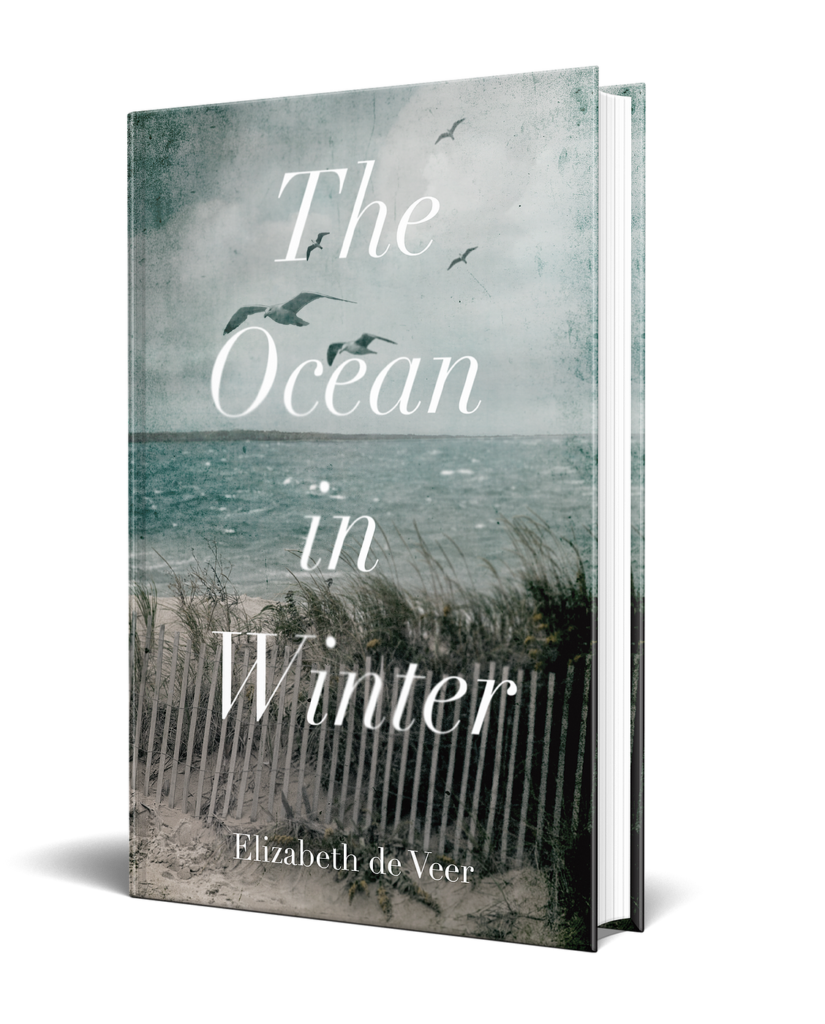
Madison Utley speaks to Elizabeth de Veer ahead of the release of her first published novel, The Ocean in Winter, about the power of persistence and —perhaps, more importantly— how she refused to let the tumult of finding an agent or publisher put a dent in her love of writing.


Q: When did writing start to become a more significant part of your life?

A: In 2003, I decided to start taking writing seriously. Until then, I had jobs that weren’t just full-time jobs, but were all-the-time jobs. I’d be in the office until 9 or 10 o’clock five days a week, and come in on the weekends as well. I knew I needed a job with less responsibility, where they respected that I’d get the job done, but also that I had this other role in my life as a writer. I ended up in a great situation where I worked full-time a few days a week, and then had a few days I could just write. That’s how I got through my first novel, which is about the Dust Bowl. That’s where the journey began.

Q: Tell me about that journey. 

A: By the time I finished my second novel, I had been looking for an agent for years. Many agents were interested and wanted to see the full manuscript, but nobody was ready to go forward. At some point during that period, I had posted my first novel in its entirety on this website where other writers could read it and leave feedback and many left really encouraging comments. My husband saw them and he was amazed at how many people liked my book. He took to the Internet and ended up finding a new agent who agreed to read my manuscript. One thing led to another and I ended up signing with him, which was really exciting.

Q: Did that feel like a turning point?

A: Absolutely. It was great having someone in my life who believed in me as a writer. Unfortunately, though, we didn’t find a publisher for my first and second novels. Then, I went back to a project I had been working on before my daughter was born. I looked at the first couple of pages and realized I needed to start over. It takes courage to say, “Don’t try to fix this. Think about what you love here, and take those pieces and use them to plant a new garden.” So, I started afresh. My daughter was in preschool twice a week then, so I’d go to a cafe to write those two days. But so much time passed between those writing sessions, I’d spend most of my time flipping through what I had written before. I’d end up spending these incredibly precious, brief periods of time trying to remember basic things like my character’s names. After a while, I realized writing every day, even if it’s only for ten minutes, helps you remember what your ideas were yesterday and then when you do have more time, you know what your intention is. That way, you get to sink your teeth into the questions that mean more.

Q: When did Stuart enter into this process?

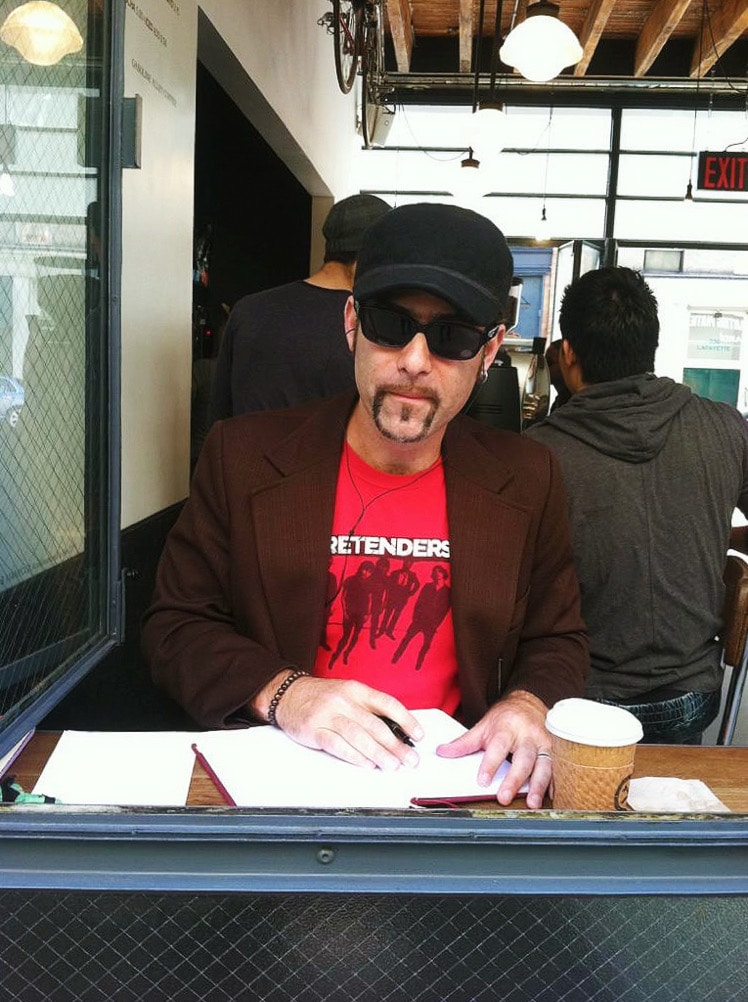
A: I finally got that third manuscript done and I gave it to my agent; he shopped it around but it still wasn’t quite there. That’s when I worked with Stuart. He got me thinking about things on such a different level. It’s incredible, the power of having somebody smart read something, somebody who gets what you’re trying to do and understands the impact you’re trying to have. The feedback he gave was so helpful. He was able to explain things to me and bring certain ideas forward in my consciousness.

Q: From there, how did things come together with Blackstone Publishing?

A: Someone said yes! I have been really thrilled to work with the great team at Blackstone. And now I am very excited that my book will be coming out this summer.

Q: What pushed you to keep writing through the years, even when you weren’t finding the traction you were looking for with your completed manuscripts?

A: I truly love writing. My advice? Even if you do get published, it still has to be about love. You have to be ready to write your truth, whatever form that comes in. Even if it doesn’t make sense to anybody else, you have to be willing to put yourself and your writing out there. You have to be brave about being creative and brave about being self-critical. And to know when one is needed and when the other should take a back seat. I felt a tremendous amount of freedom, and still do, with having a day job so my writing doesn’t have the responsibility of paying the mortgage. My writing can be whatever I need it to be. Sometimes it’s frustrating because time is an issue. But writing is the thing that makes me feel like I am the person I am. If you find the thing that makes you feel that way, it only makes sense to organize your life around it.

Q: What is your main takeaway from having been writing in earnest for nearly 20 years now?

A: Writing in any form, even if you’re not focusing on one project, should make you feel like you’re five years old, playing in the sandbox. You know how you could spend hours pouring the sand through your fingers, sitting in the moment and daydreaming about the world? It’s magical that when the sand is dry it’s one way and when it’s wet you can build castles out of it. And then you can smoosh those castles and start over. That’s how you should feel when you’re writing. Of course, it isn’t always like that. Sometimes it can be so discouraging after you’ve had another rejection, but creativity should bring you joy. I want everybody to find a way to feel that way: climb into the sandbox, play with the sand, have fun, and find that joy. Isn’t that what it’s all about? 

Stuff We (Don’t) Love: Author Crushes

To get meta about it, thoughtful words from thoughtful friends sit high on the list of stuff we love. And there are few sources of wisdom as pure in our universe as Beth Monaghan, founder and CEO of Inkhouse PR. Follow her on Medium, and Twitter, and Instagram, and don’t be shocked when her creative non-fiction hits the big time. To Beth, we now hand this installment.


The man who runs this enterprise would caution against author crushes. Should I tell Stuart that I named my new electric car Joan Didion? This thought fluttered briefly the first time a notification flashed on my phone:


Why would someone name their car after an author? Well, if you’ve ever had to rely on books to help you survive life, you get it. I always chose irreverent and courageous female authors who left guides for that survival behind. In fact, I loved books before I loved writing.

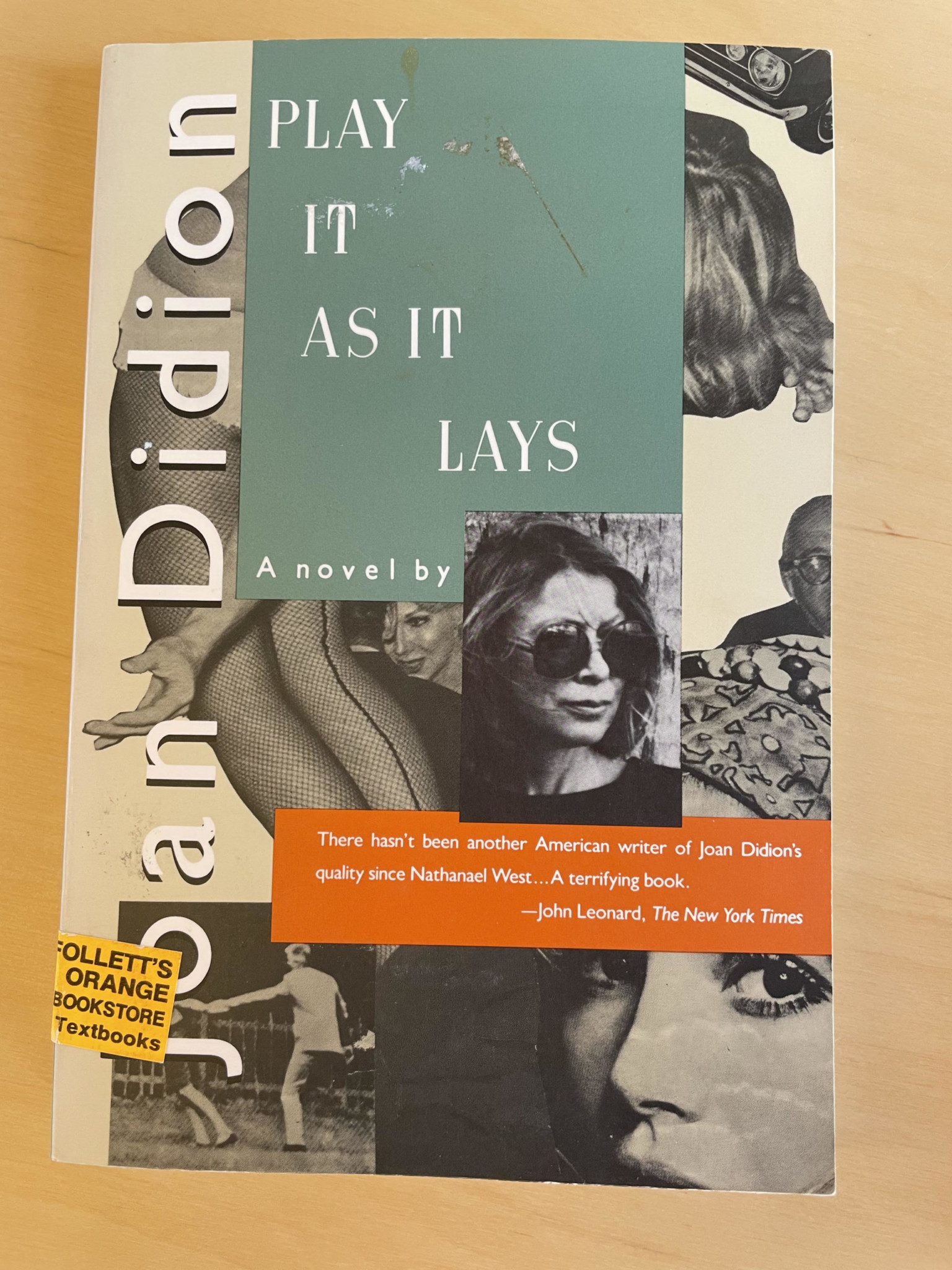
My crush on Didion began in college when I read Play It As It Lays. I still have the used copy I bought from Follett’s Orange Bookstore in Syracuse, New York for $6.75. Back then I didn’t write in my books so I don’t have a key to my favorite parts. But I remember the feeling when I finished: she was showing me how to stand inside my own darkness while still being able to take a look around. I wanted that.


When I began typing my own words, I wanted to write beautiful sentences. They’re how most of my author crushes begin. He looks shaken by this request, but still I monster on about it. Jenny Offill carving a moment in Department of Speculation. On and on she’ll go, the way she does when she thinks she doesn’t understand something and she’s scared, and she’s taking refuge in scorn and hypercriticality. A single sentence in Vivian Gornick’s memoir, Fierce Attachments, that tells us everything we need to know about her mother.

Time is the school in which we learn. That’s Didion in The Year of Magical Thinking, her memoir about her husband’s death. She possessed the power to go through grief while witnessing it, which is how we make things make sense. As we were. As we are no longer. As we will one day not be at all. Didion again, in that book that made my crush run amok. I wanted to write and live like Joan.

When I read Didion back through time, I also wanted to be her in 1968. In The White Album she published her own psychiatric report. She’d gone in for vertigo and nausea, but was kept there because of her “fundamentally pessimistic, fatalistic and depressive view of the world around her.” After a page-long reprint of her fragile mental health, Didion wrote, “By way of comment I offer only that an attack of vertigo and nausea does now seem to be an inappropriate response to the summer of 1968.” Her packing list that year included 2 leotards, a mohair throw, cigarettes, bourbon and a typewriter.

Didion lives deep, lets herself off the hook, and never assumes she knows everything. I hoped reading her words would work like osmosis, but that’s not how writing or life go down well. The shift from reader to writer asked me to type my own way into living.

These days I read in between writing projects, but rarely during them. Didion’s new volume of essays, Let Me Tell You What I Mean, just arrived and I haven’t opened it yet. In advance of its release Time asked her what it meant to be the voice of her generation. Didion: “I don’t have the slightest idea.” I fell for her all over again, for a single line that is both humble and arrogant. I aspire to pull that kind of thing off. It’s okay to have stuff we love; it reflects the parts of ourselves that we’re working to grow into. And it helps us create our own stuff we love.