
We’ve left it open for you, so you don’t even need one of those little keys. Because writing is life, and keeping it real means forgoing the line between the personal and the professional.
Clients Crushin’ It: Bjarne Tellmann
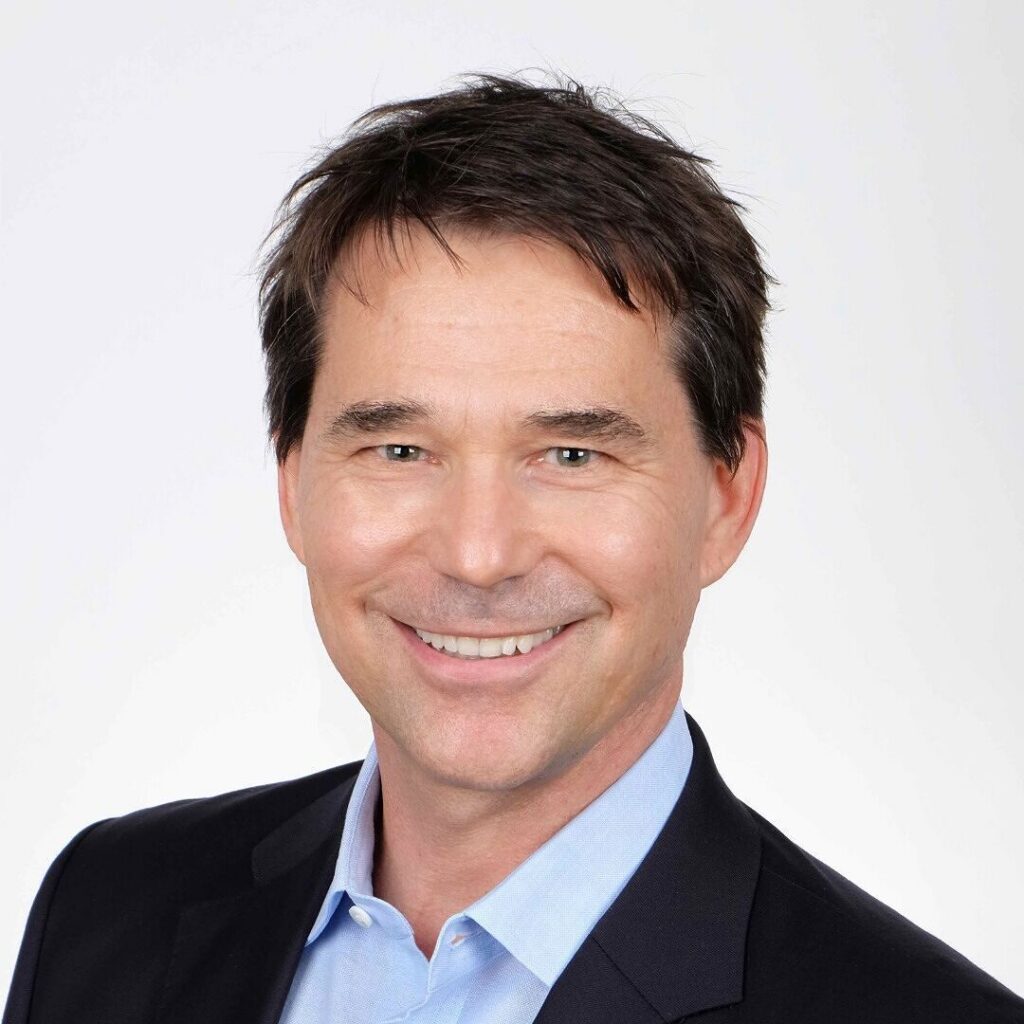
When he’s not teaching, contributing articles to various publications, or running his consulting and advisory business, Bjarne Tellmann is writing books. Earlier this month, Madison Utley spoke to him about the publication of his second, Law in the Era of AI: Clients, Firms, and the Future of the Legal Industry.

MU: To start, can you tell us a bit about your background, both professionally and in terms of your writing journey?
BT: I came off of a 30-year legal career, 18 of which I spent as general counsel of several large companies. It was a long journey that took me to many different parts of the world leading big teams. In 2014, I joined a company called Pearson. They were going through huge disruption and that was my first forced education with technology, process optimization, and thinking about running legal departments as a business. That was also the first of several times I’ve led teams through times of disruption and change.
Writing has always been a big part of my job. Lawyers write a lot. They read a lot. And then I wrote my first book back in 2017 called Building An Outstanding Legal Team off the back of the Pearson experience. I just love writing. It’s a great way to think deeply about something.
MU: In both cases you went on to write a book, what was it about the topic that made you feel you needed a longer form format than the articles you also write?
BT: I’m a very curious person. If I find myself immersed in something that I’m interested in, I want to get to the heart of it. I don’t know a better way to do that than to write something in long form. Once you pick a topic, you unpack and unpack; you do more research than you can actually put in the book, so you have to pare it back again. It’s that process of layering, research, and then paring things back. Constructing an argument, and then backing up all those arguments. It’s like a masterclass in whatever you’re doing. I enjoy that process immensely.
I also enjoy trying to make complex things feel simple. I want to explain them in a way that someone who doesn’t have background context could say, “Yeah, I understand,” while at the same time, keeping the writing at a level where people who are in that space feel like it contributes something to their work.
MU: With your global background and being based largely in Europe, how did Stuart get brought onto your Book Two team?
BT: I had an amazing editor for my first book. She was incredible, but this time around she wasn’t available and so I had to find someone else. Stuart was working as an editor for a friend of mine, Michele DeStefano, and she put me in touch with him. I’m very glad I found Stuart. He’s absolutely brilliant at what he does. Truly, he’s a genius.
When you’re writing something that is based on the deep understanding of a specific profession or area of knowledge, it’s so helpful to have someone who isn’t familiar with those things to go, “I don’t really understand what that means.” It wouldn’t even occur to you that someone wouldn’t, and then you realize how deeply in the bubble you are. So it was Stuart’s honesty and fresh eyes I so valued. He’d push back and say, “This is redundant. This doesn’t make any sense. This is good; double down on it.” That is so helpful. If I attempted this on my own, it wouldn’t be anywhere close to what it’s like having worked with a knowledgeable third party.
MU: Artificial intelligence (AI) is obviously a hot topic right now. What do you have to say to people who are terrified of what it might mean for them and their work?
BT: I’ll talk about it in the terms of my book. Legal work is not really one body of work. You can break it down into a million little chunks. Each chunk is a discrete task. Some tasks require human judgment. Those are usually the tasks at the top end of the pyramid. The 30-year partner who weighs in and has instincts and good judgment in a world of uncertainty. Then there are the tasks at the other end, the things anyone could do. The question is: which of those tasks could be done by technology? Of the ones that could be done by technology, which ones could be done better by technology? The answer is that a large number of those tasks actually can be done better by technology, and that can be a scary notion.
But I think the interesting and optimistic message is: tasks change. As technology evolves, new tasks emerge. If you think about going to somebody in 1798 when 98% of America was engaged in agriculture and you told them that in 2026, 2% of Americans will be engaged in agriculture but we’ll be producing 10 times as much, they’d be panicking. “What are all those people going to do?” But it turns out there are all these jobs they never could have conceived of–virtually every job we have now, really. So I’m optimistic that as we head into the new era, it’s less about machines taking everything over, and more about machines taking over certain things and freeing us up to do new things. It just takes time for those things to emerge, but I do believe they will come.
 MU: What do you have to say to other professionals who are interested in writing a book but might feel they don’t have the time or the specific expertise necessary?
BT: I have a friend who has written a couple of books and the advice he gave me before my first was very helpful: start with an outline. Start with your table of contents. Just that one page. And then break the table of contents into subchapters, and then consider what are the sub subchapters?
Before you know it, you have the outline of your book and then it’s paint by numbers. Once you start getting into the flow, you’ll realize you know more about your topic than you thought you did, and you’ll become absorbed in all the intricacies of learning it top to bottom. In other words: think big but start small.
Leave a Reply