Everyone wants to be in a band, right? Even the most solitary among us revel in the enhanced processing speed and deepened emotional richness that come when we work closely with another who “gets it.” In that vein, we introduce our newest collaborator, Madison Utley. And rather than rotely recite her bio, we’ll simply pass her the mic…
Someone recently asked me how I found my way into independent editing and, I was off: “So, when I was seven years old…”
The scale of my response was met with clear alarm, but rather than heeding social cues (I mean, where’s the fun in that?)*, I forged onward: buckle up, buddy, I’m taking you on a journey.
Luckily for you, dear reader, I realize my loquaciousness is better received in person than on the page, and so shall present to you here the abridged version of my tale –
For a decade of my childhood, one month a year was set aside for family road trips throughout the US. It was on a particularly glorious stretch of plains, many years and many miles into this endeavor, where I remember first articulating something which had been dancing around the periphery of my fledgling awareness: The only difference between being home or being here was going; the trick to getting things done is doing them.
It wasn’t as if all barriers were dramatically dashed from my mind in that moment, somewhere on the open road at high noon; it wasn’t an epiphany. It felt more like acknowledging an incontrovertible truth, one that settled in right at the core of my pliable twelve-year-old consciousness.
Carried into adulthood, that perspective meant I was comfortable turning ideas (I want to learn Spanish) into decisive action (I’m going to move to Colombia).
It’s not a terribly novel ideology. It doesn’t absolve me of the time and effort necessary to enact my plans. It doesn’t mean I’m inherently good at all I try. It doesn’t mean things unfold how I expect.
What it does mean is that I embrace my agency and trust in my ability to figure things out. If I come across what seems to be a worthwhile pursuit, I know I can and will make it work.
Sure, I can move to South America. Sure, I can run a marathon. Sure, I can set the record for most wings consumed in one sitting in the Greater Los Angeles area.
Sure, I can write a book.
Enter: independent editing.
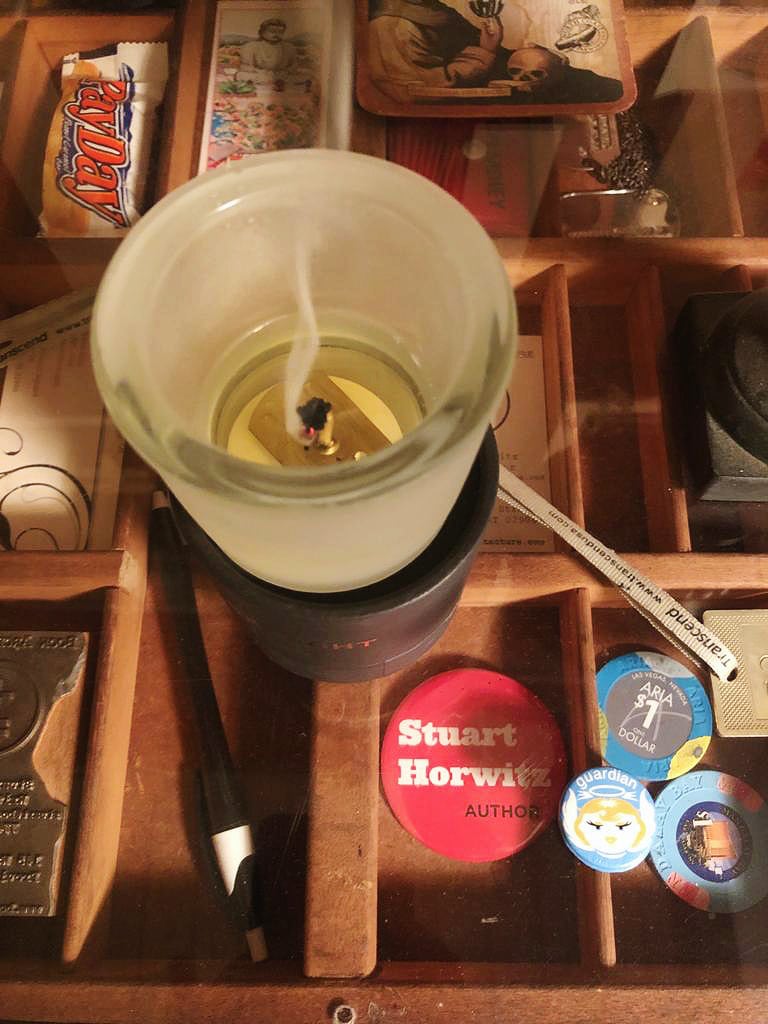
With the first major project I took on, I didn’t let the fact that I had never attempted writing on that scale deter me. I put in the time. I researched. I sought guidance from the right people (looking at you, Stuart).
I wrote the book.
And I was hooked.
Independent editing felt – and feels – like the coalescence of all that I most value in life: dealing in words, working with people, dynamism, independence, flexibility, challenge.
Fast forward several years and I’m currently based in Sydney, Australia (…because it’s beautiful. Because I want to. Because I can?). Some weeks, I’m elbow deep in projects that set my mind afire. Others, I’m trekking for days at a time through the Tasmanian wilderness. I’m dizzy with gratitude I’m able to structure my life in a way that allows me the freedom to pursue the breadth of that which I find fulfilling.
It seems to me that living well relies on (near) equal parts humility and confidence. Helping people bring their vision to the page demands the same; it’s their project, their expertise, their passion – I’m there to learn. I also know I have much to give. Therein lies the excitement.
* let the record show, in actuality, I am an excellent storyteller who is forever leaving my fans wanting more
I need to tell you something I’m not very proud of. I fear it will reflect badly on me but maybe the understanding I was granted will partly offset matters.
While in Prague, I hung out with a group of expats, sleeping on their couches and drinking other people’s warm, unattended beers in outdoor restaurants. This isn’t the bad part. Ken Nash borrowed a coaster one night in a pub and handed it back with a well-drawn caricature of me.
The caption read, “If I wasn’t a poet I would pay for these beers, man. I swear I would.” Ken later became a famous illustrator. A lot of the crew in those days went on to become professors, or novelists whose books were turned into movies, but this was before publications and careers were the most important thing. The hierarchy of the streets then was all about one-liners; your cool was based on how present you were.
You might think this is pretentious, but I remember the time a friend of mine called me up crying. What was wrong? I asked her.
“I just wrote a poem,” she said.
She was not embarrassed; she was overwhelmed by emotion. We were living for creativity in a city where every day dawned from a different angle. It is difficult to describe the atmosphere of Prague in the early 1990s. Some historians compared it to San Francisco in the 1960s or Paris in the 1920s. I’m not qualified to judge cultural moments like that, but anyone could feel how electric the atmosphere was as the city shed decades of communism. The liberated country elected an absurdist playwright, Václav Havel, to be its first president. Havel brought in the costume designer from the movie Amadeus to design the police uniforms. Shit like that.
Havel had even named the nonviolent political movement that resulted in a Western-style democracy in Czechoslovakia, the Velvet Revolution, after Lou Reed’s band, the Velvet Underground. The band itself reformed after twenty years and I got to see them perform a concert in the Palace of Culture. Americans were welcomed as symbols of intellectual freedom, although there wasn’t much in the way of employment for many of us.
I didn’t require much. I had gotten used to eating oatmeal with brown sugar, fruit, tuna with pasta and parmesan, and repeat. I was thirty-five pounds lighter in those days, although that could have been the cigarettes.
I had saved up a shoebox full of cash working as a waiter in the States, but it had now been depleted. I couldn’t ask my parents for money. They wanted me to settle down, get a career going. They didn’t want to sponsor me any longer. Although, as a fellow expat, Jennifer, pointed out, they did send me $200 and a scarf when they heard where I was going. It was going to be cold in Central Europe.
Here comes the part that makes me wince. To make ends meet, I stole books. Dozens of them, from the two English-language bookstores. And then I either returned them to the original store for cash or sold them somewhere else at half-price and put the proceeds toward my one meal of the day, timed for about 3pm.
The shopkeepers didn’t catch on, even though books like John Berryman’s Collected Poems were 347 pages in the Faber & Faber edition—not a perfect fit under the shirt, but it retailed for $32. That went a long way in a second-world economy, and No, I’m sorry, I don’t have the receipt. . . .
It’s pretty ironic that a starving artist would choose a starving-artist business from which to pull off his heists. Maybe a bookstore is the only place I felt comfortable enough to do something like that. Or maybe that’s just where I was most often. It wasn’t about being a scofflaw. I didn’t do it for thrills. At the time, I thought I was just trying to survive.
Stealing is wrong. It occurred to me several years later, standing next to my smashed-up rental car in San Francisco, where thieves had taken several suitcases, some of which were filled with expensive presentation electronics, that I was looking at karma. Among the missing items was a box of thirty copies of the books I had written. I shuddered to think what dumpster they had ended up in. Karma may not be that tit-for-tat, but it could be close.
I just wanted to be a writer so badly, and the inspiration I found overseas was unmatched in my previous experience. Writing was the main focus of every day. Based on which side of your family, or which side of your psyche, you are drawing from in the moment, this single-mindedness is either noble or indulgent; it shows either romantic impracticality or strength of commitment. I have heard it all.
They say sometimes to get along you have to beg, borrow, or steal. Or is it beg, borrow, and steal? There wasn’t anybody left to borrow from, and my conscience had finally gotten the better of me, so I was left the first option to continue my writing mission. I had to beg from someone who understood though.
I wrote a letter to my great-uncle Manny. There is a lot I could say about my great-uncle. I once dropped his birthday cake after having been given the honor of carrying it out to him during the singing, and all he did was laugh and convince me the screwed-up icing made for a better story this way. He believed in reincarnation, which was pretty unusual for a Jew born in 1910. At times, he would do things that fit his type, like drive a lime-green Cadillac or eat hard-boiled eggs with mayonnaise. But then he would come out with Zen-like sayings that you were never sure if even he understood.
I remember at one cocktail party, I was talking to a famous surgeon, or, rather, he was talking to me. “Stuart, all that matters in life is whether you think the glass is half full or half empty. Watch this”—and here, he grabbed Manny’s elbow. “Manny, is this glass half full or half empty?”
“That’s not my glass,” Manny responded.
See, like that! Did he mean that, or was that coincidentally mystical?…
I asked Manny for a thousand dollars, and he came through as a patron of sorts. He was straight with me; he told me I was now living the “life of Riley,” meaning my adventures were being paid for by someone else. But he also praised me for meeting challenges that would have been too much for him.
It was a very balanced portrait. He liked my poems and wrote me a letter on Philadelphia Savings Fund Society notepaper telling me his favorite aspects of them. He said I was a master at painting pictures with words. He said I reminded him of Will Rogers in that I “never met a man I didn’t like.” Writing did bring out the best in me.
He never told me to come home. He never mentioned the money until the end of the letter, when he wrote, “P.S. Check enclosed.”
I read his letter again looking for some judgment. He shared a few details from his life, casting everything in a positive light. When he wished me good luck that was the entire sentence. Rereading brought me only courage, all the way through to the end. “P.S. Check enclosed.”
This article was originally posted on the Good Men Project website.
What do you do if are a father of a daughter who loves to perform? If you’re Stuart Horwitz, you go busking with her.
We wake up day after day to the sound of our daughter singing somewhere in the house. On different mornings, we take her singing to mean different things. We tease Fifer about how perfect everything is, and she’ll say, “I admit it. I love my life!” Underneath this repartee is a sadness that Bonnie and I try to keep from becoming real jealousy. We envy her unconscious joy in living, the ability a ten-year-old has to just brush off the hurt and wake up singing. Other days, her singing reminds us that she is a unique individual, a product of her parents, but with something else mysterious thrown in.
It used to drive me insane that my daughter didn’t like to read. She could; she would. She just preferred to cut designer fashions out of paper and adorn them with tiny beads and messy glue. Me, my whole life is words. I coach writers, I teach writing, I write. Then something happened in my mid-thirties, when my daughter was six or seven: I stopped reading. I brought crates of novels to a used-book store and traded them for a T-shirt. I started to look at the world more directly, without the filter of black lines across white pages. I picked up the guitar. How sweet it was to make music, to bang on strings and sing to myself—this simple lesson I learned from my daughter on those mornings when I had ears to hear. No one was recording me; I wasn’t going to make a name for myself. Something even better was emerging: I was alive.
****
One day, when Fifer was eight, we received a notice that our local community center was hosting tryouts for The Wizard of Oz. For the auditions, kids had to sing a song without any accompaniment. My daughter learned “Somewhere Over the Rainbow,” with help from her grandmother and Bonnie, and then they trundled off to the audition.
“They wouldn’t even let me be a Munchkin,” Fifer said upon her return, with a disappointment that was not tinged with bitterness, if an adult can imagine such a thing. And this is a kid with perfect pitch. I’m not bragging, because her talent doesn’t come from me. We had started learning some songs together, with me on the guitar and her on vocals; I would look over at the tuner, during an obscure part of the Beatles’ “Within You Without You,” for instance, and she would be right there on the B-flat. I remember a friend of hers, a kid symbolically named Dylan, once asking her, “Why are you always singing?” Fifer replied, “Because it’s my destiny.”
Besides being fated to become a vocalist, my daughter loves money (she’s a Capricorn). To see this trait so apparent in a child’s eyes was a little shocking, but it gave me an idea: We would step it up on the songs we had been practicing—which made me happy, fulfilling my role as the father who was supposed to make her stick with things—and then we would play them on the streets for money. Busking is what it’s called; we learned that term together. “Some dads take their kids fishing,” Bonnie said. We would perform Sgt. Pepper’s Lonely Hearts Club Band straight through twice (with the exception of tracks two and four, which we never got around to learning). Though Fifer vowed me to secrecy—she wanted to keep her “normal girl” status, playing softball (pretty well) and viola (no worse than anyone else in third grade)—she looked forward to our “gigs” as much as I did.
Her enthusiasm for performing didn’t surprise me. One time when she was about three, we attended a crowded story time at the local library. After the reader had stepped down, Fife crawled between all the sprawled-out kids and patient parents and got into the big chair. Then she picked up a book. “Now it’s my turn,” she said. She couldn’t read yet, so she sort of performed the book by looking at the pictures. The reader, an older gentleman who was vaguely famous, came over and clapped me on the shoulder. “I’ve never seen that before. Good luck, Jack.”
Maybe it was genetic. In my early twenties, as a performance poet, I had stood in front of the American Express office in Prague after dawn, declaiming Bob Dylan lyrics, with a hat placed on the sidewalk to collect tips.
****
Busking is a genuine artistic experience. No gatekeepers determine whether you’re good enough; the audience does. People either dropped money into our guitar case or they didn’t. Some, like the crowd outside Fenway Park, were surly and drunk and not into having their hearts moved by a young girl. Others were encouraging, like the woman who told Fifer, “Jesus loves you, honey.” Fife turned to me, and without a trace of irony, said, “That’s so nice!”
We had hecklers. My ex–business partner said, “You’re teaching your kid to beg, huh?” But in what other job can an eight-year-old make over $300 in one summer? Fifer gave some of the money she made to charity, and she put some in the bank for a car, but then she bought herself a powder blue iPod Nano, for which I paid only the tax. It was a proud moment in my parenting career.
We didn’t do it for the money, of course. There were times when we would be walking to our spot, and one of us would freak out a little and ask, “Why are we doing this again?” And the other one would respond with what became our mantra: “To face our fears!” We did it for that moment after we had set up our music stands, when we had taken a deep breath and were looking around for a sign that we knew wasn’t going to come from anywhere but inside us. And then we would start.
I can hear Fife now, imitating Paul: “One! Two! Three! Fo! [We’re Sergeant Pepper’s Lonely Hearts Club Band / We hope you have enjoyed the show…]” It was always easier when a few people she knew were in the audience; then if, for instance, the high-E string on my electric guitar broke during “Lovely Rita,” we could get other people to sing and clap along. Other times Fife couldn’t get started at all. That’s when I would forget about the weight of the amps that I had to carry and forget about my own need to be heard, which was always lurking. I would be ready to pack it all up again if I had to, and I’d offer to do so. Then maybe the cloud would pass, and I could coax Fife back into connecting with her confidence.
“It always feels better to play than not to play,” was one of the quotes Fifer wrote down from those days—she chronicled every show we did over the span of two summers. Besides the good lines, she recorded the set list, the screw-ups, the amount of money we made (of course), and the magical moments. She wrote about the time on Boston Common when we drew a crowd only after a dying pigeon named Sam did his diseased circle dance in our guitar case. Then there was the time we had just finished a set of Sergeant Pepper’s and an eleven-year-old girl came up to Fifer and asked, “Did you write those songs?”
Some things she didn’t write down. My father and mother came to see us and listened as we performed “She’s Leaving Home.” I sang John’s chorus: “We struggled hard all our lives to get by…What did we do that was wrong?” I’m not sure how much of the healing my father and I were doing was conscious, but afterward he bought me a state-of-the-art portable recorder to capture our best tunes. “What does that mean,” Fifer asked, “She’s leaving home after living alone for so many years?” You will never know, I said.
The shows went on, and we had our ups and downs. There were great moments. A female drummer—Rachel—joined us, and she did the best-ever “Ah-ah-ah-aahs,” in “A Day in the Life.” A rhythm section—Robbie and Timmy—filled in for Rachel one night and then never left. My daughter, now nine years old, was fronting a Beatles cover band. Yeah, that made me proud.
Then there were nights when she wanted to go to church or a school party. But we had already made all of our arrangements, and you can’t just cancel on other people at the last minute…
New York was probably our finest hour, blasting through a punk version of “Somewhere Over the Rainbow” in defiance to what had started the whole experience, or holding an a cappella sing-along during Bob Marley’s “Redemption Song” (we had increased our repertoire by then). A guy named Adam approached us in Washington Square Park, offered us fruit, and called us “his lovelies.” “You have helped me feel free again,” he pronounced. Somebody else said they wanted to make a documentary about us.
And then Fifer said she was done. She gave no reason, until I pushed, and then her reasons kept changing. “There’re too many kids here,” she said one night in Newport, when we drove away from the town without ever playing a note. (Was she getting self-conscious now that she was approaching preadolescence?) Or she would say, “I’m bored.” But how can you say that? You had your arms up in exultation after your last performance, squealing, “That was so fun!”
Then I recovered a little Zen. It is what it is. Stop asking questions. Don’t accuse her of being lazy, not committed. Let it go and be there for her in the way she needs you to be. Keep learning the lessons at hand.
****
Three months after our last gig, someone e-mailed us about an upcoming audition. The national tour of Chitty Chitty Bang Bang was coming to a stage much bigger than the one where The Wizard of Oz had played. Did she want to go try out? Because it was totally up to her; I wasn’t going to take the rap as some pushy stage father. Yes, she said. And yes again, when I asked again later.
The ornate lobby was crammed with kids warming up for their well-taught dance routines. Eighty-six kids were trying out for seven spots. When a ten-year-old next to me belted out “Everything’s Coming Up Roses,” I thought it was Ethel Merman herself. “Well, it’s a good experience,” I told Fife. “Think about all the people who aren’t even here. There’s no way they’re going to make it—right?—if they’re not even here?”
Fifer was going to perform her last, best busking song, the one we would play over and over again in Central Park, when the tourists couldn’t give two shits about us: “…And you, take me the way I am.” They took the kids away in groups of ten, leaving us parents in the lobby.
“Tell me again how she said it?” I asked. Fife had returned to the lobby, and I wanted her to describe precisely how the judge had responded to her performance. Fife went through a few different intonations until she was satisfied with her delivery: “Wowwww!”
I was the first in the house to find out Fife had been picked for the part. I bought the Chitty Chitty Bang Bang DVD and played the theme song loud enough one November morning to wake everyone with the news.
That night, I wanted to watch the movie. “Dad,” Fifer said, “the performances aren’t until March.”
Apparently I was still learning, about nonattachment, about doing the thing that is to be done in that moment, about being there for somebody even when what they need is changing too fast for conscious record. Then I settled into our rematch of Sorry! Sliders, trying my best to beat her, because that’s how we do things around here.
For a good solid year of my tour, I opened up a session on The Book Architecture Method by playing two clips from the Beatles’ song “Sexy Sadie” in succession. The first 0:46 was basically just John playing some dusky chords into a two track recorder in India. Then I played the first minute of the finished version and we talked about how George changed the lyrics to make them less of a direct attack on his guru at the time, Paul brought some bright piano chords right off the top followed by Ringo’s shuffling drumming, and they all contributed sarcastic La-la-la-la’s in the background.
If someone walked in late, looking confused, I asked them, Are you here for the class on the White Album? My point was to show the distance traveled between the initial, halting idea for a song and the polished and produced version. We hear the latter and we thing: I could never do that… We hear the former and we think: Interesting.
It’s the same across genres and media. It’s one thing to examine a smudged charcoal landscape sketch of Van Gogh’s and quite another to be engulfed by the final days intensity of “Wheatfield and Crows.” We get confused. Confused that art isn’t made, by somebody, over a succession of drafts, each improving, if not entirely, on the version that came before it.
And that’s why some Stuff We Love are demos. I recently treated myself to a box set of Bob Dylan’s studio recordings from 1965-1966. It contained the finished songs from this era, which I had heard a hundred times each. There were multiple master takes so I could listen to just the piano and the bass on “Like a Rolling Stone.” But there were also a series of screw-ups and false starts, experiments, arguments, breakthroughs and new directions until some of these famous songs were codified.
I love hearing the banter between Dylan and his bandmates, such as lead guitarist Robbie Robertson soon to be of The Band. Among the 25 takes of “One of Us Must Know (Sooner or Later)” you can hear the following exchanges:
Dylan: “Can you do that, Robbie? But I don’t mean just, I don’t just mean that. Can you do anything else? But not that. Some kind of a… no, no, no. Yeah, I do want it, but not so specific.”
*
Dylan: “I don’t think that’s the right way… do you think so?”
*
Robbie: “I’m going to modify it a little bit. To make it blend with what he’s doing.”
Dylan: “Sure! Tell me what you mean…”
I don’t know what Dylan means when he complains to Rick Danko, “No! I don’t like that bass run. That’s… that’s modal.” I’m not even sure he does. These tapes communicate being in the wilderness with only a small spark of an idea, and tending that flame so it can get air under sheltered conditions until it begins to burn on its own.
And that’s why we recommend looking for demos—translated to whatever art and taste suits you—when you need to be reminded of not just your humanity but the humanity of the artists you admire. Their experience of being lost, then gradually found, through a combination of curiosity and faith, looks like something we could call perseverance—if it wasn’t fueled at least as much by residing in the delight of creation.